
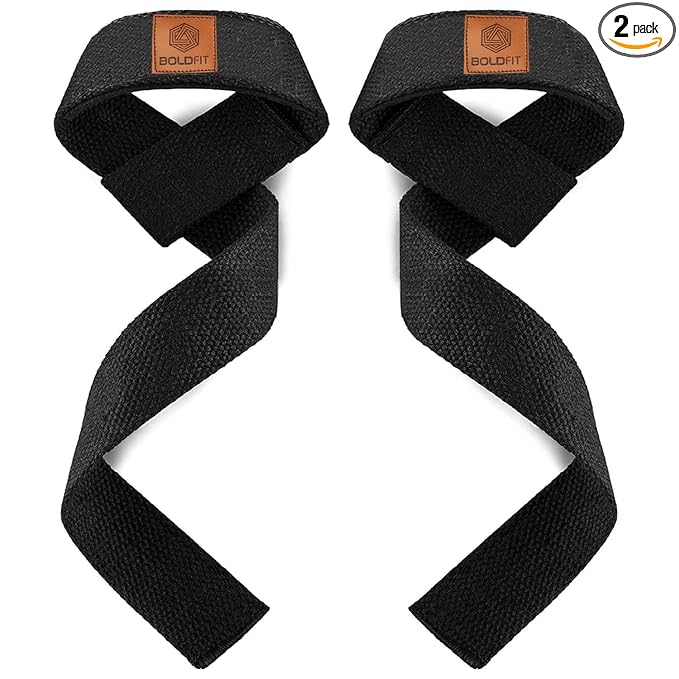
Weight Lifting Straps
Original price was: ₹899.00.₹369.00Current price is: ₹369.00.
Description
Weight Lifting Straps
- WEIGHT LIFTING STRAPS – The perfect gym accessories for men and women alike, these wrist straps provide maximum wrist support when performing a high intensity exercise. As a wrist supporter for gym, it can be used during your weight lifting sessions — as a heavy deadlift strap to secure your grip. It improves your deadlift grip, and more while securing your wrist for such heavy movements.
- WRIST SUPPORT AND GYM HAND GRIP – Without improper support, your wrist becomes open to injuries, strains and sprains. These weight lifting straps act as the ideal wrist supporter for gym. When worn correctly, they aid your wrists during weight lifting, like deadlift and so on as they not only secure the wrist but also improve your gym hand grip. This avoids weights falling on you.
- GYM ACCESSORIES- These weight lifting straps are a must-have gym accessories for men, and gym accessories for women. For anyone who partakes in a hard-core weight lifting sessions, these wrist strap help in securing your wrist. They improve your hand grip in the gym, as they are anti-slip and super comfortable.
- SOFT PADDING – Gym equipments are usually tough and rough, but with the soft padded, high quality cotton wrist straps for gym, never worry about an uncomfortable grip during gym sessions. These weight lifting straps take the pressure off of your hands, wrist keeping them secure and soft and are specifically designed to improve hand grip for gym.
- EASY-TO WEAR – In a few simple steps, secure your wrist using these incredibly easy-to wear wrist straps for gym. They are lightweight, superior quality and can be carried everywhere you workout. These weight lifting straps can be easily fastened thanks to the velcro strip. So strap on and use it for deadlift grip, kettlebells, dumbbells and more!
-
Introduction
When it comes to strength training, one of the biggest challenges athletes face is grip fatigue. Whether you’re pulling heavy deadlifts, performing rows, or executing shrugs, your forearm grip often gives out long before your larger muscle groups do. This is where weight lifting straps become game-changers.
Designed to secure your hold on the barbell, dumbbells, or pull-up bar, weight lifting straps allow you to push past grip limitations and focus on building the muscles that matter most — your back, shoulders, and legs. For serious lifters, bodybuilders, CrossFit athletes, and fitness enthusiasts, weight lifting straps are a must-have accessory in the gym bag.
What Are Weight Lifting Straps?
Weight lifting straps are durable bands, usually made from cotton, nylon, or leather, that wrap around your wrists and the bar. Their primary function is to:
-
Enhance grip strength.
-
Reduce forearm fatigue.
-
Support heavy lifts.
-
Improve overall lifting performance.
They are typically used during pulling exercises like:
-
Deadlifts
-
Pull-ups
-
Barbell rows
-
Dumbbell shrugs
-
Lat pull-downs
-
Rack pulls
By transferring some of the load from your hands to your wrists and forearms, weight lifting straps allow you to lift heavier weights safely and effectively.
Benefits of Using Weight Lifting Straps
1. Lift Heavier Weights
The biggest advantage is that straps help you go beyond the natural limits of your grip. You can deadlift 10–20% more weight when using straps compared to raw grip alone.
2. Focus on Target Muscles
Instead of worrying about grip strength, you can concentrate on contracting your back, traps, and hamstrings.
3. Prevent Grip Fatigue
For exercises like shrugs and rows that involve high reps, straps keep your grip from burning out too quickly.
4. Reduce Injury Risk
By stabilizing the bar, straps lower the chances of slipping and potential injury.
5. Versatile for All Athletes
Whether you are a powerlifter, bodybuilder, CrossFit athlete, or casual gym-goer, weight lifting straps adapt to all training needs.
Types of Weight Lifting Straps
There are different designs to suit different lifting styles:
1. Single Loop Straps
-
Easiest to use.
-
Quick to put on and take off.
-
Great for beginners and casual lifters.
2. Lasso Straps
-
Most common design.
-
Adjustable loop around the wrist with a long strap that wraps around the bar.
-
Offers strong support and versatility.
3. Figure-8 Straps
-
Designed for heavy pulling like deadlifts and strongman training.
-
Double loops create a secure hold on the bar.
-
Excellent for maximum loads but less versatile.
4. Padded Straps
-
Extra cushioning around the wrist.
-
Ideal for comfort during long sessions.
-
Prevents skin irritation.
Materials Used in Weight Lifting Straps
Cotton
-
Soft, comfortable, breathable.
-
Affordable and beginner-friendly.
Nylon
-
Durable, resistant to wear and tear.
-
Preferred for heavy lifting and long-term use.
Leather
-
Premium material with maximum durability.
-
Great for advanced athletes who want longevity.
How to Use Weight Lifting Straps
-
Slide your wrist through the loop.
-
Adjust so the strap lies flat against your skin.
-
Wrap the free end around the barbell or dumbbell handle.
-
Twist tightly until secure.
-
Grip the bar over the wrapped strap and lift.
Exercises Enhanced by Weight Lifting Straps
-
Deadlifts: Push past grip failure and focus on hamstrings and back.
-
Pull-ups: Maintain longer sets without forearm burn.
-
Rows: Target lats and traps with heavier weights.
-
Shrugs: Train traps with maximum load.
-
Lat Pull-downs: Isolate the back muscles without worrying about grip.
Weight Lifting Straps vs. Lifting Hooks
-
Straps: More versatile, natural bar feel, cheaper.
-
Hooks: Provide complete grip assistance but less flexible for dynamic lifts.
Common Mistakes When Using Straps
-
Over-reliance – Don’t use straps for every exercise; train grip strength too.
-
Poor wrapping technique – Can cause slippage or wrist pain.
-
Wrong size – Straps should be snug but not overly tight.
-
Using for pushing movements – Straps are meant for pulling exercises only.
Who Should Use Weight Lifting Straps?
-
Beginners: To safely learn heavy pulling exercises.
-
Bodybuilders: To increase training volume for back and traps.
-
Powerlifters: To maximize deadlift training while saving grip for competition.
-
CrossFit Athletes: For high-rep pulling workouts.
-
Rehab & Recovery: For those regaining grip strength after injury.
Care & Maintenance
-
Wash cotton straps regularly to avoid odor.
-
Wipe down leather or nylon straps after each workout.
-
Store in a cool, dry place.
-
Inspect regularly for wear and replace if frayed.
Choosing the Right Weight Lifting Straps
When buying straps, consider:
-
Your training goals.
-
Material preference.
-
Type of strap (loop, lasso, figure-8).
-
Comfort and padding.
-
Brand reputation.
-
Price vs. durability.
FAQs About Weight Lifting Straps
Q1. Will using straps make my grip weaker?
Not if you balance training. Use straps selectively and also train grip strength with farmers carries, static holds, and forearm work.Q2. Should beginners use straps?
Yes, especially when lifting heavy weights that their grip can’t handle.Q3. Can straps be used in competitions?
Most powerlifting federations don’t allow straps in competition deadlifts. They’re mainly for training.Q4. Are straps better than chalk?
Chalk improves grip friction, while straps eliminate grip fatigue. Many lifters use both.Q5. How long do straps last?
With proper care, quality straps can last 1–2 years or more. -
-
Introduction to Weight Lifting Straps
Weight lifting has always been a symbol of strength, discipline, and growth. Whether you are a professional athlete, a competitive bodybuilder, or a beginner exploring resistance training, one thing remains constant — the need for supportive, high-quality accessories that maximize performance while minimizing risks. Among these accessories, Weight Lifting Straps stand out as one of the most essential tools for serious lifters.
At their core, weight lifting straps are designed to enhance grip strength, enabling athletes to lift heavier loads safely and effectively. These simple yet powerful accessories are used by millions worldwide to push through plateaus, improve form, and protect joints during intense workouts.
In this extended description, we will explore every aspect of Weight Lifting Straps — from their history, materials, and types to their benefits, training applications, psychological impact, and role in professional sports. This detailed resource will not only highlight why these straps are indispensable but also help buyers make an informed decision before investing in them.
Chapter 1: The Evolution of Weight Lifting Straps
The concept of using grip-enhancing tools dates back centuries. Early strongmen, wrestlers, and warriors often used leather bands or cloth strips around their hands to secure their grip on heavy objects. As weight training evolved into a modern sport, so did lifting accessories.
-
Ancient Training – Gladiators, soldiers, and wrestlers often wrapped cloth or leather around their hands for additional grip during training or combat.
-
20th Century Lifting Culture – With the rise of bodybuilding legends like Arnold Schwarzenegger and strength athletes such as Vasily Alekseyev, the demand for specialized equipment grew. Weight lifting straps became mainstream in gyms worldwide.
-
Modern Day Innovation – Today, lifting straps are made with advanced materials such as heavy-duty cotton, nylon, neoprene padding, and even high-tech grip-enhancing coatings. They are engineered for durability, comfort, and maximum efficiency.
This evolution shows how lifting straps are no longer just an accessory but a performance-enhancing tool trusted by athletes across disciplines.
Chapter 2: Understanding Weight Lifting Straps – What Are They?
Weight lifting straps are long, durable strips of material — typically made of cotton, nylon, or leather — that wrap around both the wrist and the barbell/dumbbell. By creating a secure connection between the lifter’s hand and the equipment, straps reduce the reliance on grip strength, allowing lifters to lift heavier loads without losing control.
Key Features:
-
Length – Standard straps range between 20–24 inches.
-
Material – Cotton, leather, nylon, or mixed fabric.
-
Padding – Some models include neoprene padding for extra wrist comfort.
-
Design Variants – Loop straps, figure-8 straps, and lasso straps.
Essentially, straps act as a grip enhancer, shifting the stress from the forearms to the larger muscles such as the back, legs, and shoulders — where real strength is developed.
Chapter 3: Types of Weight Lifting Straps
Not all straps are created equal. Different styles serve different purposes:
-
Lasso Straps (Standard Straps)
-
Most common type.
-
Wraps around the bar multiple times for maximum grip.
-
Best for beginners and general gym use.
-
-
Figure-8 Straps
-
Designed for extreme heavy lifting such as powerlifting or strongman training.
-
Locks the bar directly into the grip, eliminating nearly all grip strain.
-
Ideal for deadlifts and heavy shrugs.
-
-
Closed Loop Straps
-
Pre-looped for quick setup.
-
Great for Olympic lifting and CrossFit, where fast transitions are required.
-
-
Hook Straps
-
Includes a metal hook instead of fabric wrapping.
-
Simplifies grip but may limit natural hand positioning.
-
Choosing the right type depends on training style, lifting goals, and personal comfort.
Chapter 4: Benefits of Using Weight Lifting Straps
Weight lifting straps are more than just a convenience — they can transform a workout routine. Some major benefits include:
-
Enhanced Grip Strength
-
Prevents bar slipping during heavy lifts.
-
Reduces forearm fatigue, allowing for longer workouts.
-
-
Increased Lifting Capacity
-
Enables lifters to pull beyond their natural grip strength.
-
Particularly useful for back and pulling exercises like deadlifts, shrugs, and rows.
-
-
Improved Muscle Isolation
-
Focus shifts to target muscles rather than worrying about grip.
-
Example: During heavy lat pulldowns, straps ensure lats—not forearms—do the work.
-
-
Reduced Risk of Injury
-
Stabilizes the wrist joint and reduces strain.
-
Prevents accidental bar drops.
-
-
Better Training Efficiency
-
Less time wasted adjusting grip.
-
More energy spent on effective lifting.
-
In essence, straps unlock new levels of performance by eliminating grip as a limiting factor.
Chapter 5: Exercises Best Suited for Weight Lifting Straps
While straps can be used in almost any weightlifting context, they are particularly beneficial for:
-
Deadlifts – Helps lift heavier without grip fatigue.
-
Barbell Rows – Ensures proper back engagement.
-
Pull-Ups/Chin-Ups – Allows extended sets without losing grip.
-
Shrugs – Lets you overload traps with heavier weights.
-
Romanian Deadlifts (RDLs) – Improves hamstring focus.
-
Heavy Dumbbell Holds – Essential for grip training and forearm development.
Note: Straps should not replace grip training completely. Balance is key.
Chapter 6: Materials & Durability of Weight Lifting Straps
Cotton Straps
-
Breathable, affordable, and comfortable.
-
Slightly less durable than nylon.
Nylon Straps
-
Stronger and longer-lasting.
-
Less comfortable but highly durable.
Leather Straps
-
Premium feel, extremely durable.
-
Break-in period required.
Hybrid Materials
-
Cotton with neoprene padding or rubberized coating for extra grip.
Durability is crucial since straps must withstand hundreds of heavy training sessions. Quality stitching, reinforced loops, and high-grade material make all the difference.
Chapter 7: Psychological Advantages of Using Straps
Lifting heavy is not just physical — it’s mental. Using straps can have several psychological benefits:
-
Confidence Boost – Knowing your grip won’t fail gives you courage to attempt heavier lifts.
-
Consistency in Training – Prevents frustration from grip fatigue.
-
Motivation – Progress becomes more visible when you can lift heavier.
-
Focus on Form – With grip secured, lifters can concentrate on technique.
In this way, straps play a role in mental conditioning as much as physical enhancement.
-
-
1. Powerlifters
Powerlifters use weight lifting straps primarily for heavy deadlifts and shrugs. Straps allow them to focus on maximal loads without grip failure interfering with their lifts.
-
Example: Elite powerlifters can lift 10–20% more using straps during training.
-
They help maintain training volume while reducing the risk of tendon overuse in forearms.
2. Bodybuilders
Bodybuilders benefit from high-rep training where grip fatigue can limit back and trap engagement. Straps allow:
-
More reps with heavier weights.
-
Better isolation of target muscles.
-
Longer training sessions without hand discomfort.
3. CrossFit Athletes
CrossFit workouts often involve high-intensity, high-rep pulling movements like pull-ups, rope climbs, and barbell rows. Using straps in these scenarios:
-
Maintains grip during long WODs (Workouts of the Day).
-
Reduces forearm fatigue for consecutive movements.
4. Rehabilitation & Recovery
Straps are also used for rehab exercises when forearm or wrist injuries limit grip strength. They allow safe progressive loading, helping:
-
Seniors regain strength.
-
Injured athletes return to normal training safely.
Chapter 9: Common Mistakes When Using Weight Lifting Straps
Even experienced lifters make errors that reduce strap effectiveness or increase injury risk:
-
Over-reliance
-
Using straps for all exercises may weaken grip over time.
-
Solution: Alternate between free grip and strap-assisted exercises.
-
-
Incorrect Wrapping
-
Wrapping too loosely causes slippage; too tight can restrict blood flow.
-
Solution: Wrap snugly but comfortably around wrist and bar.
-
-
Using for Pushing Movements
-
Straps are designed for pulling, not pushing.
-
Pushing exercises like bench press should not involve straps.
-
-
Ignoring Material Quality
-
Cheap straps may fray or snap under heavy loads.
-
Solution: Invest in high-quality cotton, nylon, or leather straps.
-
Chapter 10: Choosing the Right Weight Lifting Straps
When selecting straps, consider:
-
Material – Cotton for comfort, nylon for durability, leather for premium use.
-
Length – Longer straps allow multiple wraps; shorter straps are faster to use.
-
Width & Padding – Wide padded straps are more comfortable, especially for heavy lifting.
-
Training Style – Figure-8 straps for maximal lifts; lasso straps for general lifting.
-
Brand & Warranty – Trusted brands ensure safety, durability, and support.
Chapter 11: Care & Maintenance of Weight Lifting Straps
Proper maintenance ensures straps last for years:
-
Cotton/Nylon Straps: Wash periodically to remove sweat, avoid mold, air dry.
-
Leather Straps: Wipe down after workouts; avoid soaking in water.
-
Inspect Regularly: Check for frayed stitching or worn areas to prevent accidents.
-
Storage: Keep in a dry, cool place away from direct sunlight.
Chapter 12: Myths About Weight Lifting Straps
Myth 1: Straps Make Your Grip Weak
-
Reality: If used selectively and alongside grip training, straps enhance performance without weakening grip.
Myth 2: Only Beginners Use Straps
-
Reality: Professional powerlifters, bodybuilders, and CrossFit athletes rely on straps to maximize performance.
Myth 3: Straps Are Unsafe
-
Reality: High-quality straps improve safety by reducing bar slippage and wrist strain.
Chapter 13: Training Programs With Weight Lifting Straps
Beginner Program
-
Deadlifts: 3 sets × 8–10 reps
-
Barbell Rows: 3 sets × 10–12 reps
-
Shrugs: 3 sets × 12–15 reps
Intermediate Program
-
Weighted Pull-ups: 4 sets × 8 reps
-
Romanian Deadlifts: 4 sets × 8–10 reps
-
Barbell Shrugs: 4 sets × 12 reps
Advanced Program
-
Rack Pulls: 5 sets × 5 reps (heavy)
-
High-Rep Pull-Ups: 5 sets × 12–15 reps
-
Farmers Carries with Strap Assistance: 4 × 40 meters
Using straps during these programs allows lifters to maximize muscle recruitment and lifting volume without premature grip fatigue.
Chapter 14: Global Popularity of Weight Lifting Straps
-
USA & Europe: Used widely in gyms, bodybuilding, and CrossFit facilities.
-
Asia: Rapid growth in bodybuilding and Olympic lifting communities.
-
Australia & Middle East: Preferred for powerlifting and functional fitness.
-
Online Fitness Trend: YouTube, Instagram, and TikTok tutorials frequently include strap-assisted exercises.
The widespread adoption of weight lifting straps highlights their universal appeal and essential role in strength training.
Chapter 15: Extended Conclusion
Weight lifting straps are more than just accessories — they are performance enhancers, safety tools, and confidence boosters for lifters at all levels. By allowing heavier lifts, improving muscle isolation, and reducing the risk of injury, straps unlock your true lifting potential.
Whether you are:
-
A beginner looking to build confidence,
-
A bodybuilder increasing muscle volume,
-
A CrossFit athlete performing high-intensity WODs, or
-
A powerlifter aiming for personal records,>>>>>>SHOP NOW<<<<<<
-

Reviews
There are no reviews yet.